Integrated Crop Care Records, Exceptions and Shift Handoff
Crop-care shifts combine plant handling, scouting, sanitation, identity and records. The final Course 005 lesson integrates the three practical work areas—IPM scouting, propagation workstation and canopy maintenance—into a single evidence and handoff workflow. Learners distinguish work completed from work held, preserve labels and quarantine status, document plant or batch exceptions, and transfer unresolved observations without inventing a diagnosis or completion record.
Key vocabulary
A controlled status that pauses movement, processing or routine work until an identified condition is reviewed or released under procedure.
A record of a deviation, abnormal condition, incomplete task or discrepancy requiring explicit follow-up.
A structured transfer of completed work, observations, deviations, unresolved conditions and priorities to the next responsible role.
The ability of another qualified person to understand what happened, to which plant or material, when, by whom and what remained unresolved.
Identity survives every task transition
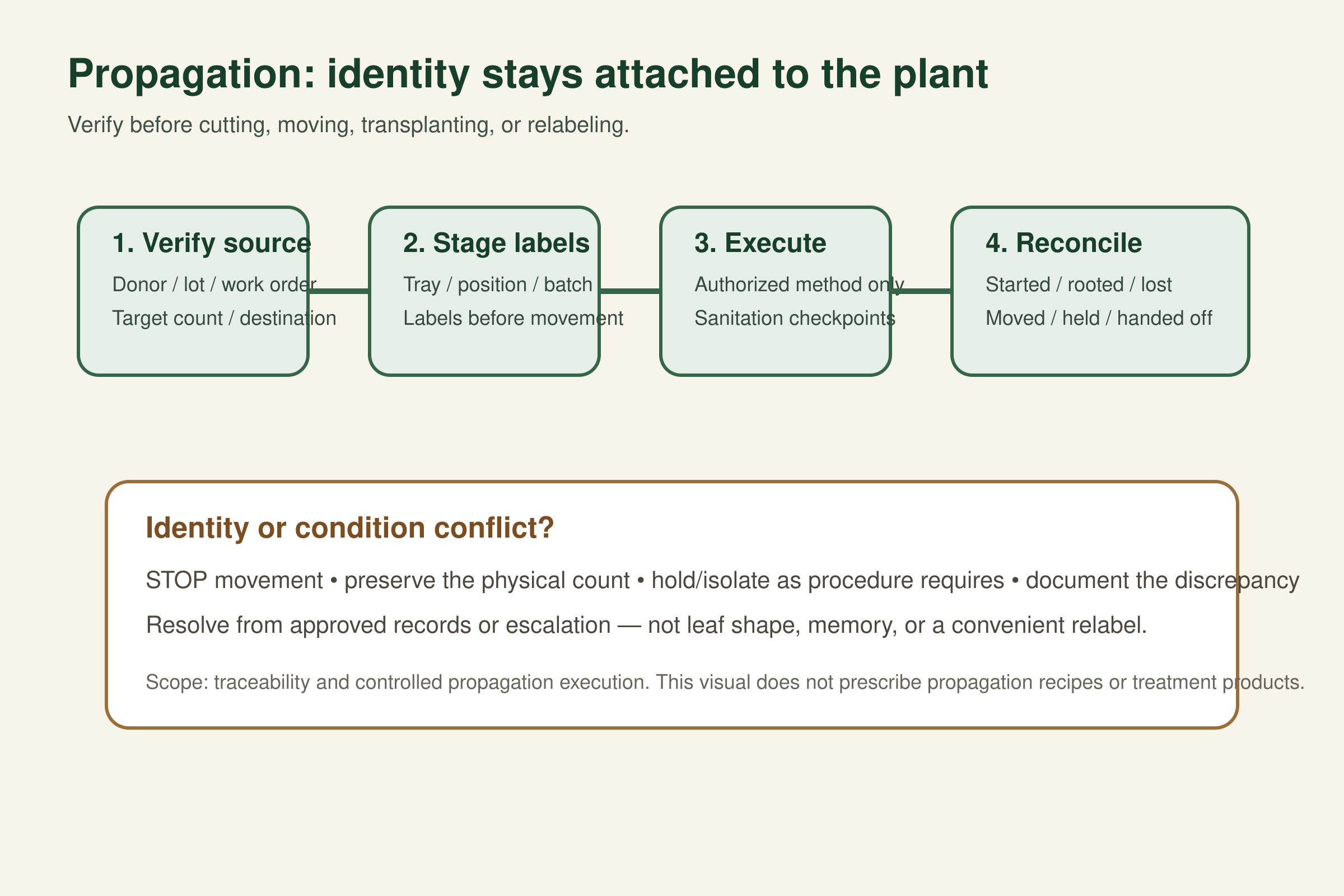
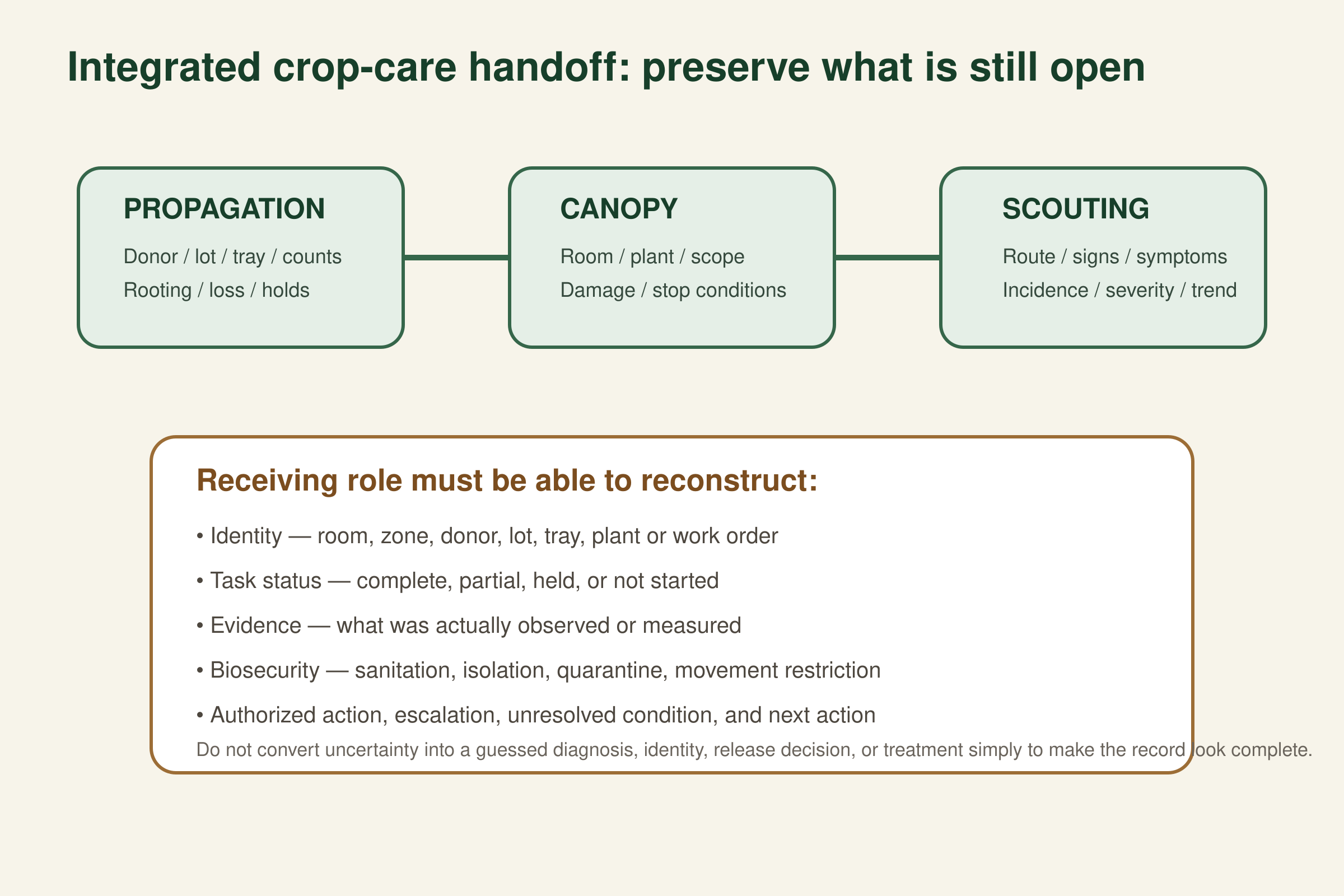
Propagation, scouting and canopy records should retain room, zone, donor, lot, tray, plant or work-order identity as required. A correct crop observation attached to the wrong plant or a clean tray with uncertain donor identity is still a quality failure.
Work status is factual
Record what was completed, held, skipped under procedure or left incomplete. Do not mark a canopy block complete when plants were held for scouting, and do not reconcile propagation counts by inventing an identity for missing or uncertain material.
Sanitation and quarantine actions belong in the record
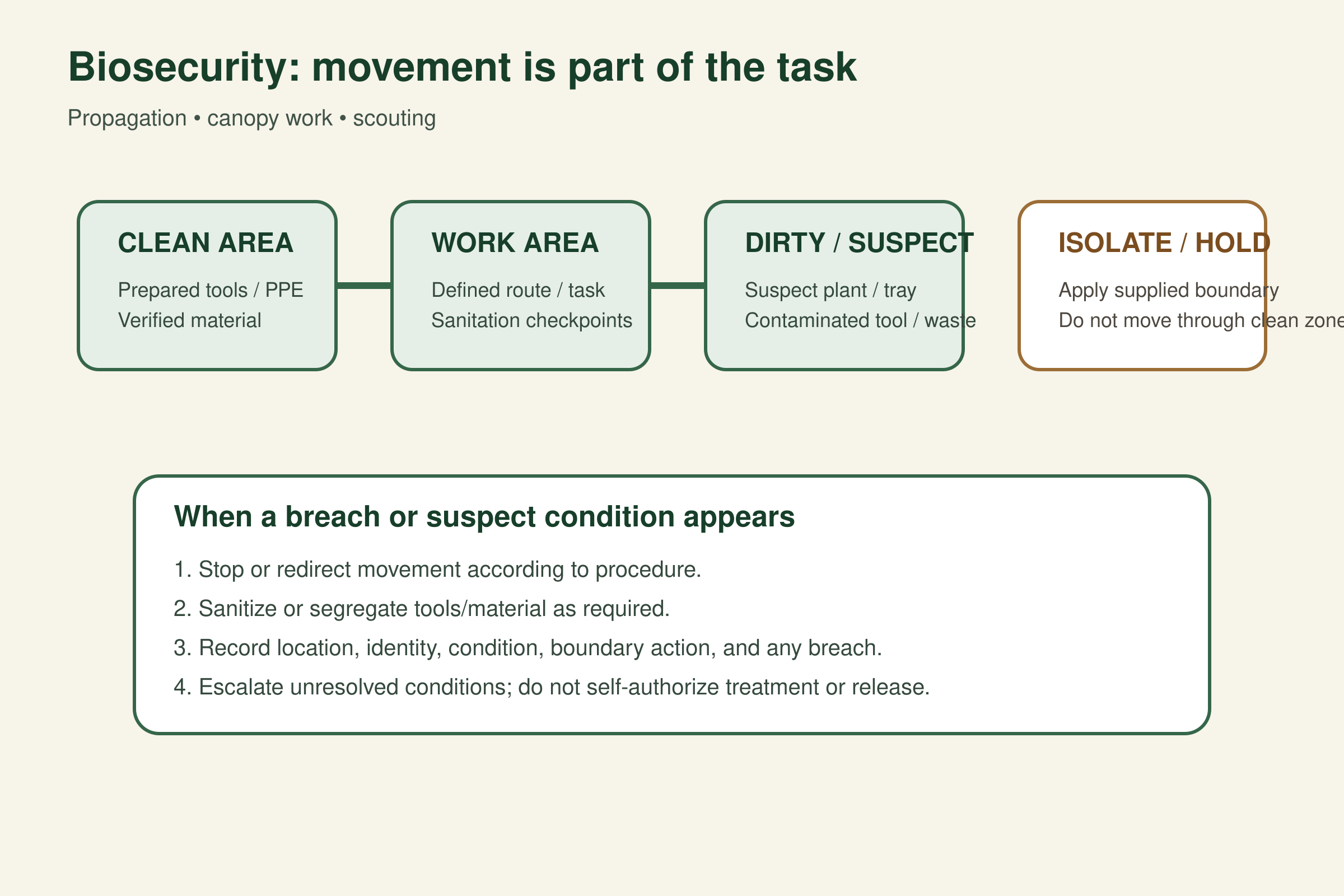
When the supplied workflow requires tool sanitation, clean-to-dirty movement, quarantine, isolation or a hold, preserve those actions and any breach in the record so the next shift understands contamination risk and movement restrictions.
Handoff preserves uncertainty and authority
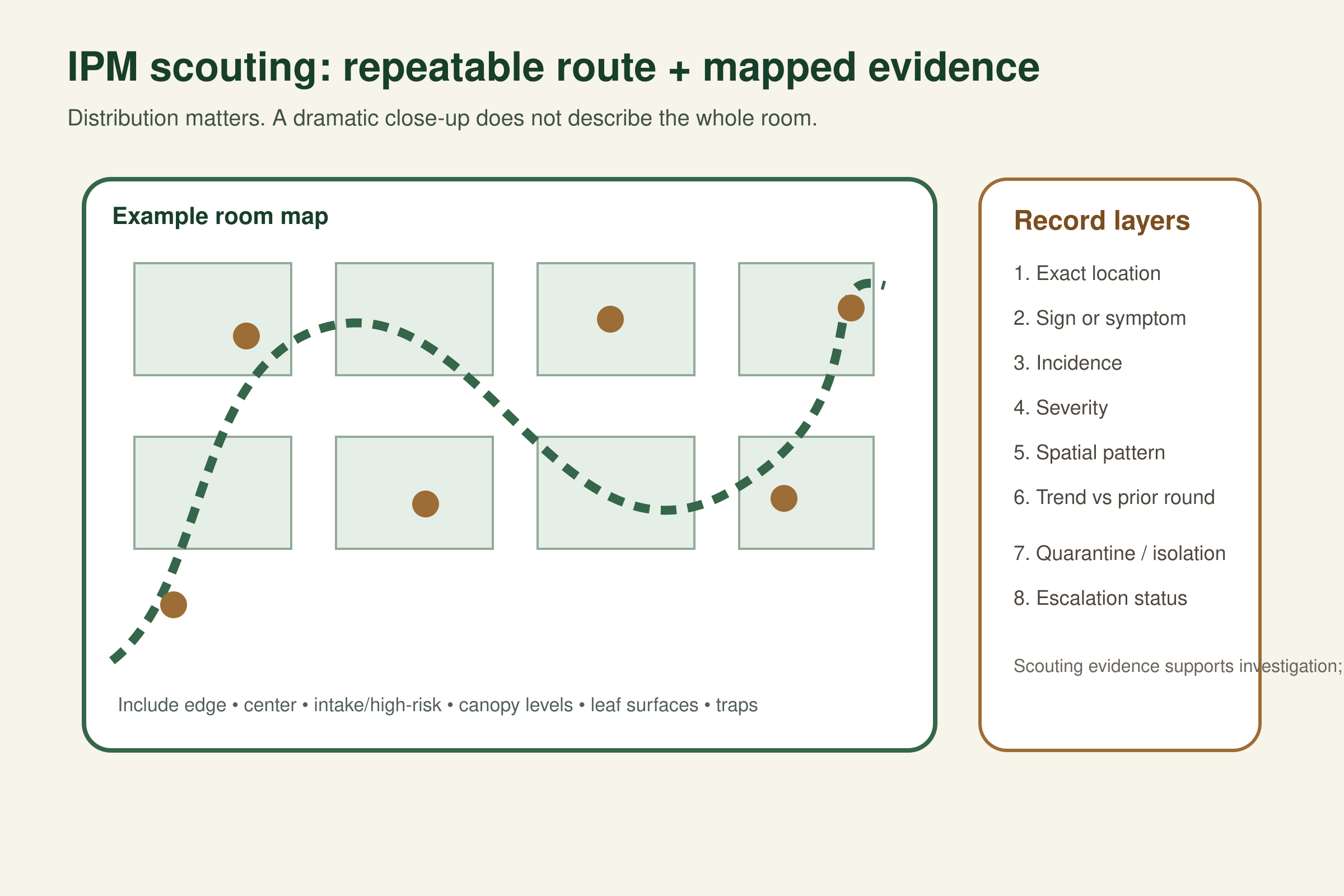
The next person should know the observation, distribution, actions completed, notification or escalation, current hold/quarantine status and required follow-up. A handoff should not replace an unresolved pest, disease or plant-health question with a guessed diagnosis simply to make the record look complete.
Worked examples
- A propagation tray is held because identity cannot be verified. The handoff records tray location, physical count, the unresolved identity issue, movement restriction and who was notified rather than assigning a cultivar name from memory.
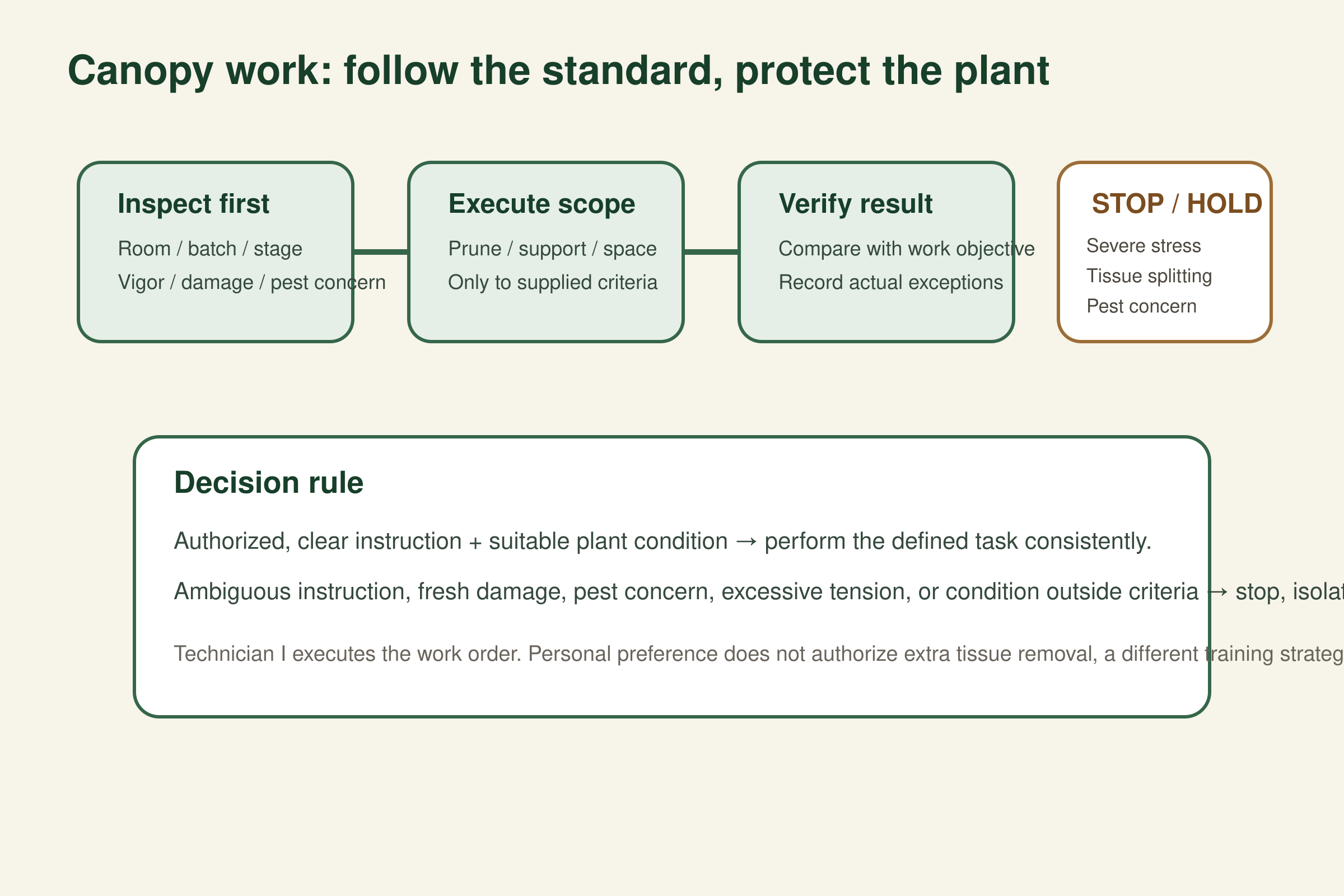
- Canopy work stops in one zone after suspicious pest signs. The record identifies completed plants, the held area, sanitation step, scouting evidence and escalation so the next shift does not unknowingly resume through the suspect zone.
Common mistakes
- Marking held or incomplete crop work as complete.
- Losing plant or tray identity when transferring work between teams.
- Leaving quarantine status only in verbal communication.
- Turning an unresolved scouting observation into a confirmed diagnosis in the handoff.
Integrated crop-care handoff
The receiving role should be able to reconstruct each affected plant, tray, zone or task and know what remains open.
Downloadable practice: propagation workstation
Use this printable worksheet as the propagation station record for identity, sanitation, counts, exceptions, quarantine/isolation and handoff.
Downloadable practice: IPM scouting route
Use this printable worksheet as the scouting station record for route, map, sign/symptom evidence, incidence, severity, pattern, trend, quarantine and escalation.
Downloadable practice: canopy maintenance work order
Use this printable worksheet as the canopy station record for work-order scope, plant condition, sanitation/quarantine, stop conditions, result verification, exceptions and handoff.
Practical application
Complete an integrated shift packet with three stations: propagation workstation, IPM scouting route and canopy-maintenance work order. Use the three downloadable practice sheets as station records, then produce a final handoff showing identity, sanitation, work status, evidence, holds, escalation and next actions without guessing diagnosis or authority.
Lesson summary
Reliable crop care is coordinated work, not isolated technique. Technician I protects identity and biosecurity, follows the assigned plant task, records scouting evidence and actual completion, and hands unresolved conditions to the correct role without guessing or exceeding authority.